Friendships

  • Family - Friendships - Relationships - Self Help

    When Excuses Burn Away: Choosing Who You Become

    There comes a moment in a woman’s life when the stories she’s told herself about who she is and why she is that way begin to feel too small. 

    Not untrue … but a little incomplete. 

    The explanations that once protected her start to feel like cages. The narratives that once made sense begin to lose their power, and something deeper rises quietly from within: the realization that understanding your past is not the same thing as living your full potential future.

    Growth begins when excuses end because they are no longer enough to carry you forward.

    Most of us begin healing from past wounds by looking backwards. We trace patterns through childhood, relationships, losses, betrayals. We try to learn the language of trauma, attachment, and survival. We begin to understand why we respond the way we do, why certain wounds feel tender and why certain fears never fully leave us.

    And that stage matters. 

    It’s important work. Don’t get me wrong. 

    Understanding your past is not weakness, it’s more of awareness that comes with time. 

    But there does come a moment when awareness stops being the destination and becomes the starting line.

    Power begins when ownership begins.

    Ownership is often misunderstood. It shouldn’t be blame or shame. It’s not denying the ways you were hurt or the ways life shaped you before you had any say in it. Ownership is simply the permanent decision to stop living as a reaction to what happened in years prior and start living as an author of what comes next.

    At some point, healing becomes your responsibility.

    You cannot change where you started. You cannot rewrite the early chapters or erase them. But you can decide whether those chapters become your identity or your blueprint on the things you want to duplicate or change.

    And that is where the person you want to be begins.

    Your past is not just a collection of wounds. It’s an outline to learn from. 

    It shows you exactly what shaped you, what strengthened you, what broke you open, and what you never want to repeat, again. 

    We all inherit patterns. 

    Some of us inherit silence. Some of us inherit chaos. Some of us inherit emotional distance, fear of abandonment, perfectionism, over-functioning, or the endless need to prove our worth. 

    But self-awareness is the moment you realize that “this is who I am” is often just “this is who I learned to be.”

    And once you see that, something shifts.

    One day you just ask yourself, is this who I want to be?

    That question is both terrifying and liberating. Because it removes the safety of excuses. It asks you to stand in the space between who you were conditioned to be and who you are brave enough to become.

    And that space is often uncomfortable.

    It means noticing when you repeat old patterns even when you know better. It means acknowledging the ways you sometimes recreate familiar dynamics because they feel known, even when they don’t feel good. It means recognizing that healing is not a passive process, but an active, daily choice.

    You cannot keep blaming childhood while repeating the same patterns as an adult.

    Not because your childhood didn’t matter, but because you matter now.

    And here is the truth that no one talks about enough: change is not about becoming someone completely different. It is about refining who you already are. It is about taking the blueprint of your past and deciding consciously which pieces you keep, which pieces you reshape, and which pieces you leave behind.

    You get to choose.

    You get to decide that the resilience you learned stays but the self-doubt goes. The empathy stays but the self-sacrifice shifts into boundaries. The strength stays but the armor softens into self-trust.

    This is where power lives.

    Not in pretending you were never hurt.

    Not in denying where you came from.

    But in recognizing that your past gave you information, not limitations.

    Growth begins when excuses end. Power begins when ownership begins.

    And transformation happens the moment you realize that healing is not about fixing who you were it is about consciously creating who you are becoming.

    No excuses. You are now an adult and your past doesn’t dictate your future. 

    That is the real reveal.

    Until next week,

    Love,
    Karin 

    If this blog resonated with you, you can receive pieces like this weekly in your inbox. Complete the pop-up form and subscribe today!


  • Family - Friendships - Relationships - Self Help

    With New Levels Come New Devils

    How to level up in your video game of life…

    As anyone who has experienced remarriage understands, life changes — and with those changes come new challenges. 

    One of the most unexpected ones is friendship. 

    When we bring a new partner into our lives, we hope our friends will honor that choice. 

    Sometimes they do. 
    Sometimes they don’t.
    And once in a while, they just won’t.

    In our earlier relationships, many of us form friendships with other couples. There’s a specific dynamic to those relationships — a kind of chemistry “per se” built on who we were and what our lives looked like at that time. Those friendships made sense in that season.

    But when we change partners, that chemistry can change, too.

    Sometimes it’s a clash of values. Sometimes it’s discomfort. Sometimes it’s a combination of things that are hard to name. And sometimes, couple friendships simply don’t work because friends don’t connect with the new partner — or don’t want to. When that happens, it creates hurt feelings and resentment, even when no one intends harm.

    What we really want is simple: for our friends to accept the choices we’ve made and trust that they were made thoughtfully.

    Real friendships don’t disappear overnight. They evolve and rebuild. They stay connected to the primary relationship — the person, not the version of their life that existed before. Still, some friendships slowly fade because new partners don’t always fit into old dynamics, and not everyone is willing to adjust and adapt.

    Which brings me to the next level: children.

    When we remarry, we don’t just gain a spousewe gain a family. And yet the language we use doesn’t reflect the reality of that bond. The word step feels outdated. It minimizes how significant those children truly are. A “step” implies distance, something secondary, when in truth these children become part of our new nuclear family.

    When you remarry, your spouse’s children aren’t an extension of your life. They become part of it. The love that grows there is real and intentional. We don’t love them “less than.” Oftentimes, we love them very deeply.

    For couples who have never experienced divorce or remarriage, this can be difficult to understand. Their frame of reference is different. But hurt feelings surface when that love isn’t recognized — when bonus children are treated as optional, or as something to be worked around rather than embraced.

    Friendship, at its core, is about growth. It’s about making room for the people we love as their lives evolve. It’s about accepting our friends’ choices, welcoming their families in all their forms, and understanding that love doesn’t need qualifiers to be real.

    This means: accepting the partner we chose, accepting the family that comes with the new partner, and accepting the bonus kids as exactly that: actual family.

    Because leveling up in life means new challenges, yes but it also asks the people around us to level up, too.

    And to the friends who have done this, the ones who showed up with open hearts, open homes, and open minds, this is a thank you. 

    Thank you for embracing change instead of resisting it. Thank you for welcoming new partners, new children, and new dynamics without hesitation or judgment. Thank you for loving fully, adapting graciously, and reminding us what real friendship looks like.

    And that kind of friendship is everything.

    Top level, in fact.

    That’s my Reveal for the week.

    Love,
    Karin 

    If this blog resonated with you, you can receive pieces like this weekly in your inbox. Complete the pop-up form and subscribe today!
  • Family - Friendships - Relationships - Self Help

    Let Them … Or Not

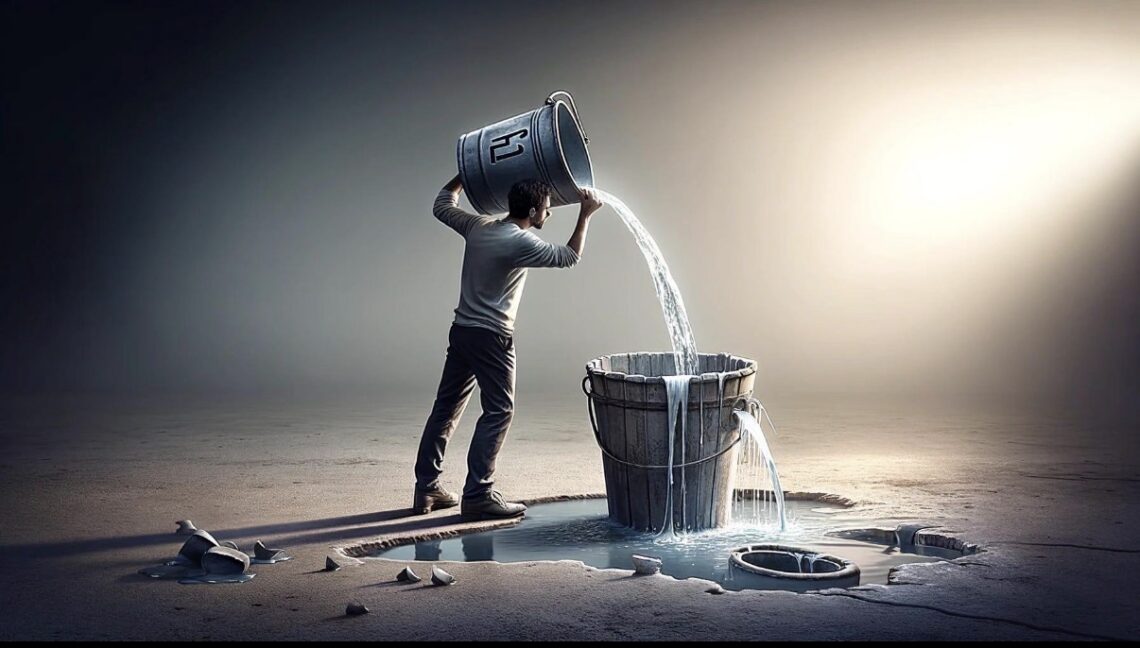
    The Let Them Theory is a powerful mindset tool talked about by motivational speaker Mel Robbins. It taps into something we all feel but rarely say out loud: we (you, me, moms, wives, husbands, kids, dog sitters) are tired of holding everything together, tired of managing reactions, tired of fixing situations, tired of softening hard truths, and tired of carrying emotional weight that isn’t ours to carry.

    We’re all weight conscious as it is.

    And yes, there is something freeing about stepping back and letting people be who they are and do what they want, because Gd knows they’re going to anyway. “Let Them” gives you space. It releases ridiculous pressure and it reminds you that you do not need to earn approval or chase anyone’s understanding.

    I definitely love that part of it.

    But here’s the part no one likes to admit: “Let Them” doesn’t make the problem go away. It doesn’t allow you to speak your peace, so you wind up never getting closure. It doesn’t resolve misunderstandings or heal the emotional bruise left behind. It doesn’t address the impact something had on you. It doesn’t clean up the mess that’s still sitting inside your little mind and body.

    “Let Them” is a release, yes, but it’s a release without closure.

    And when something is left open, unspoken, or unresolved, we all know it has a funny (not funny) way of lingering, like garlic from last night’s fettuccine. It sits in your chest giving you heartburn. It pokes at your anxiety. It scratches at your confidence. You wake up thinking, “I should have said something,” and the silence quite frankly becomes heavier than the actual conversation you avoided.

    We can all “Let Them,” and honestly, we all should in certain situations.

    Let people have their opinions.

    Let them choose their own path.

    Let them misunderstand you when correcting them costs too much of your energy.

    Let someone walk away if being in your life is not a priority for them.

    Let them show you who they are. That part is especially healthy and protective.

    But sometimes you DO need to engage.

    Not because you want drama or because you’re controlling, and not because you “can’t let things go,” but because avoiding the conversation costs you more than simply having it.

    Your mental health doesn’t improve when you swallow your truth like a piece of steak not properly chewed.

    Your self-esteem doesn’t really grow from remaining silent. Resentment doesn’t merrily dissolve on its own — and we all know that is a fact. And pretending something didn’t bother you doesn’t magically stop it from bothering you.

    Some issues actually require you to speak up, to name the truth, to express the impact.

    That’s not being overly dramatic, that’s being emotionally responsible.

    If something affects your home, your kids, your stability, your boundaries, or your internal peace, this is not a “Let Them” moment.

    These are moments where your voice is actually required.

    If the relationship means something to you, choosing silence isn’t really fair to either person. If someone’s behavior repeatedly hurts or drains you, disengaging isn’t being mature, it’s avoidance dressed as strength. And if your anxiety spikes every time you replay what happened in your mind, that’s your system telling you the truth: you need to engage. You need to say something.

    Think of it like popping a pimple or balloon.

    Intentional engagement is the missing piece here. It’s the difference between choosing peace and avoiding discomfort. It’s knowing when your silence protects your boundaries and when your silence betrays your mental and emotional needs.

    It’s saying, “This matters to me,” even if your voice shakes. It’s choosing the tough conversation over a lifetime of internal questioning and refusing to let avoidance become your coping mechanism.

    “Let Them” is great for releasing what doesn’t belong to you.

    But it’s not a complete emotional strategy.

    It doesn’t give you closure or resolve the inner conflict brewing. It doesn’t heal the parts of you that were affected.

    So yes, “Let Them.”

    But don’t let this philosophy become the one-way exit ramp from your own truth.
    Sometimes the healthiest, strongest, most self-honoring thing you can do is to ENGAGE — calmly, intentionally, and clearly.

    Not to fight.

    Not to fix.

    Not to control.

    But to honor the parts of you that deserve your own closure and peace.

    That’s my Reveal for the week. 

    Love,
    Karin

    If this blog resonated with you, you can receive pieces like this weekly in your inbox. Complete the pop-up form and subscribe today!

  • Friendships

    When Friendships Fade: The Quiet Breakups of Getting Older

    When Friendships Fades: The Quiet Breakups of Getting Older

    There’s a strange kind of grief that comes with outgrowing a friendship.

    It’s not dramatic like a romantic breakup.

    It’s not final like death. But it is a type of grief.

    It leaves a quiet, lingering ache — especially as we get older …

    Or as I like to say-wiser.

    Some friendships fade naturally. Others end in betrayal, bitterness, or something more
    subtle but just as painful — silence.

    In childhood, friendship is easy.

    You bond over who sits next to you in class or who shares their snack or lunch.

    In your twenties, it’s who helps you move, who parties with you, who stays on the phone when your heart breaks.

    And it often breaks.

    But in your thirties and beyond, life usually gets heavy. Careers, kids, aging parents, trauma, therapy — they all take up space.

    And not everyone can stay in your life when you’re growing (or treading water).

    Not everyone wants to.

    Some friendships fall apart quietly.
    You stop texting.
    They stop reaching out.
    You realize you’re the only one checking in.

    But others fall apart loudly. Especially after a divorce or other major life change. Divorce,
    in particular, is a mirror in a way that other life shifts are not.

    Divorce shows you who your people really are.

    Some friends step up, bring dinner, call you just to let you cry, remind you who you are when you forget.

    Those are your keepers.

    But others disappear like footprints in a rainstorm.

    Some even compete with your healing. Your glow up threatens them. Your freedom reminds them they’re stuck.

    Your new joy — especially when you find love again — becomes too much for them to witness. There are the friends who can’t handle your success, your growth, or your second chance.

    And there are the friends who don’t want to support you — they want to be you.

    Think single white female.

    Jealousy isn’t always obvious. It shows up in micro-cuts.
    Passive-aggressive digs.
    Backhanded compliments.
    Withholding.
    Undermining.

    Suddenly, these friends are less available.
    Less happy for you.
    Less safe.

    And sometimes — painfully — they want what you have…

    Including the new man in your life.

    It’s hard to admit, but some friendships don’t survive when the spotlight shifts.

    It’s not your job to shrink to keep someone comfortable. Real friendship doesn’t require you to play small or stay broken to remain loved.

    Sometimes, you realize the friendship was built on a version of you that no longer
    exists, a version they felt they were “above.”

    And now that you’ve changed, healed, risen — they’re gone. Or, worse yet, since they no longer control the narrative, they are jealous of your happiness.

    Let these people go.

    You don’t need to make announcements. You don’t owe anyone an exit interview. Just stop investing where you are not valued.

    There is so much peace in walking away from what no longer fits.

    You’re allowed to outgrow people. You’re allowed to choose friends who show up without conditions — who celebrate your wins, stand beside you in the trenches, and protect your peace …

    Not poke holes in it.

    Getting older means becoming more intentional. Not everyone gets to stay. That’s not cruelty — that’s clarity.

    Because growing up isn’t just about becoming who you’re meant to be.

    It’s also about realizing who was never really with you to begin with.

    That’s my Reveal.

    Love,
    Karin

  • Friendships

    You Want a World Without Jews? Good Luck With That.

    You Want a World Without Jews? Good Luck With That.

    A warning from the child of a Holocaust survivor.

    There’s a virus going around again.

    Here it goes…

    Not the kind you swab for — the kind that mutates in plain sight.

    It shows up in lazy jokes, whispered conspiracy theories, Harvard yard protests, and Ivy

    League job offers rescinded over Jewish names.

    It shows up in “just asking questions,” in influencers’ smirks, in silent bystanders who’d rather

    keep their timelines clean than their conscience clear.

    It shows up in toddlers videos, doctors, nurses, paid protesters, paid organizers, teachers,

    professors- so many people in society who help generate the age old truths.

    It’s called antisemitism.

    And it’s spreading — fast.

    Faster than gossip in a hair salon or a cold in a toddlers birthday party.

    But it spreads.

    But here’s what you should know: this isn’t theory to me.

    This isn’t academic.

    This is personal.

    This is blood-deep.

    My father was ten years old when he was shot in the leg and thrown onto a Nazi train. He

    jumped off. Ten years old.

    Can you even imagine?

    He hid in forests.

    He Starved.

    He Bled.

    He Survived Nazi work camps.

    He Lost his entire family — parents, siblings — except for one sister.

    He didn’t grow up. He clawed his way up.

    And somehow, he still believed in people. Still believed in the future. He built a life. A family. A

    legacy of grit, faith, and love that now spans generations — and will never, ever be erased.

    So when I see antisemitism rise again — rebranded as “activism”, or wrapped in memes, or

    spewed from the mouths of people who should damn well know better — I don’t get shocked.

    I get loud.

    Because my father didn’t survive horror so we could swallow hate quietly.

    He didn’t jump off that train so I could watch from the sidelines while history reboots itself in

    high definition.

    Let’s be clear: antisemitism doesn’t wear a uniform anymore.

    It wears a hoodie.

    A lanyard.

    A mic.

    It’s not marching — it’s monetizing.

    And if you’re still calling it “just a fringe,” you haven’t been paying enough attention.

    This isn’t a blip. It’s a warning.

    And I will not raise the next generation pretending that silence is safety.

    Silence is permission. Silence is privilege. Silence is betrayal.

    So no, I won’t tone it down.

    I will be Jewish. Loudly. Proudly. Publicly. Painfully. Joyfully.

    Because my existence is not a threat — but it is a refusal.

    A refusal to disappear.

    A refusal to bow.

    A refusal to let my father’s story — our story — be reduced to a cautionary tale when it was

    always a battle cry.

    Let me say this plainly:

    When you target Jews, you don’t just come for us.

    You come for human progress.

    You come for science, medicine, law, education, storytelling, and innovation.

    And you shoot yourselves in the foot while doing it.

    We’re 0.2% of the global population — and somehow responsible for curing diseases, shaping

    democracy, building media, defending justice, and yes, even creating the vaccines some of you

    couldn’t wait to roll up your sleeves for.

    So when you chant “Death to the Jews,” just know: you’re also shouting “Death to your future

    doctors, your lawyers, your professors, your therapists, your scientists, your favorite show

    runners, your next Nobel Prize winners.”

    Congratulations — you’re not fighting a people.

    You’re gutting a foundation.

    Let me make it personal:

    My father survived the war, came to this country with nothing but a bullet in his leg and a

    second language, and built a life so full of love, family, and resilience that his existence alone is

    a middle finger to every monster who tried to end him.

    He didn’t just survive — he contributed.

    And now I watch our youth — Jewish and not — being brainwashed to believe Jews are

    oppressors, colonizers, thieves of culture, holders of privilege.

    It’s a lie.

    But more dangerously, it’s a seductive lie.

    They are being trained to hate the very people who fight for freedom of thought. Who create

    medicine, defend civil liberties, teach history, invent tech, and write the shows they binge on

    the weekends.

    This isn’t a Jewish problem.

    This is everyone’s problem.

    When you scapegoat Jews all over the world, you unravel the thread holding society together

    — intellect, ethics, and yes, inconvenient truths.

    And history has shown — every time they come for the Jews first, they come for everyone else

    next.

    So go ahead.

    Cancel us.

    Blame us.

    Target us.

    Watch what happens when you remove the people who built the very platforms you use to

    preach your ignorance.

    The rise in antisemitism isn’t a footnote.

    It’s a five-alarm fire.

    And if you’re not speaking out — you’re standing in the smoke pretending it’s not your house

    burning down.

    My father didn’t leap off a train, survive genocide, and build a family from ashes so I could

    keep my head down while the world convinces itself that Jewish excellence is something to

    fear instead of celebrate.

    I will not apologize for being Jewish.

    I will not make myself small so others can stay comfortable in their delusions.

    I will not allow this rising wave of hate to go unchecked while history claws its way back with a

    prettier filter and a platform with more followers.

    Jews do not control the world. But we have helped shape it — for the better.

    And if that’s your problem? You don’t want justice. You want destruction.

    And we’ve seen that movie before.

    Let me be clear…

    It doesn’t end with us — it ends with everyone.

    That’s my Reveal.

    Love,

    Karin